
What do Romanians and Bulgarians in the UK think of the imminent ‘flood’ of new Romanians and Bulgarians?
VICE

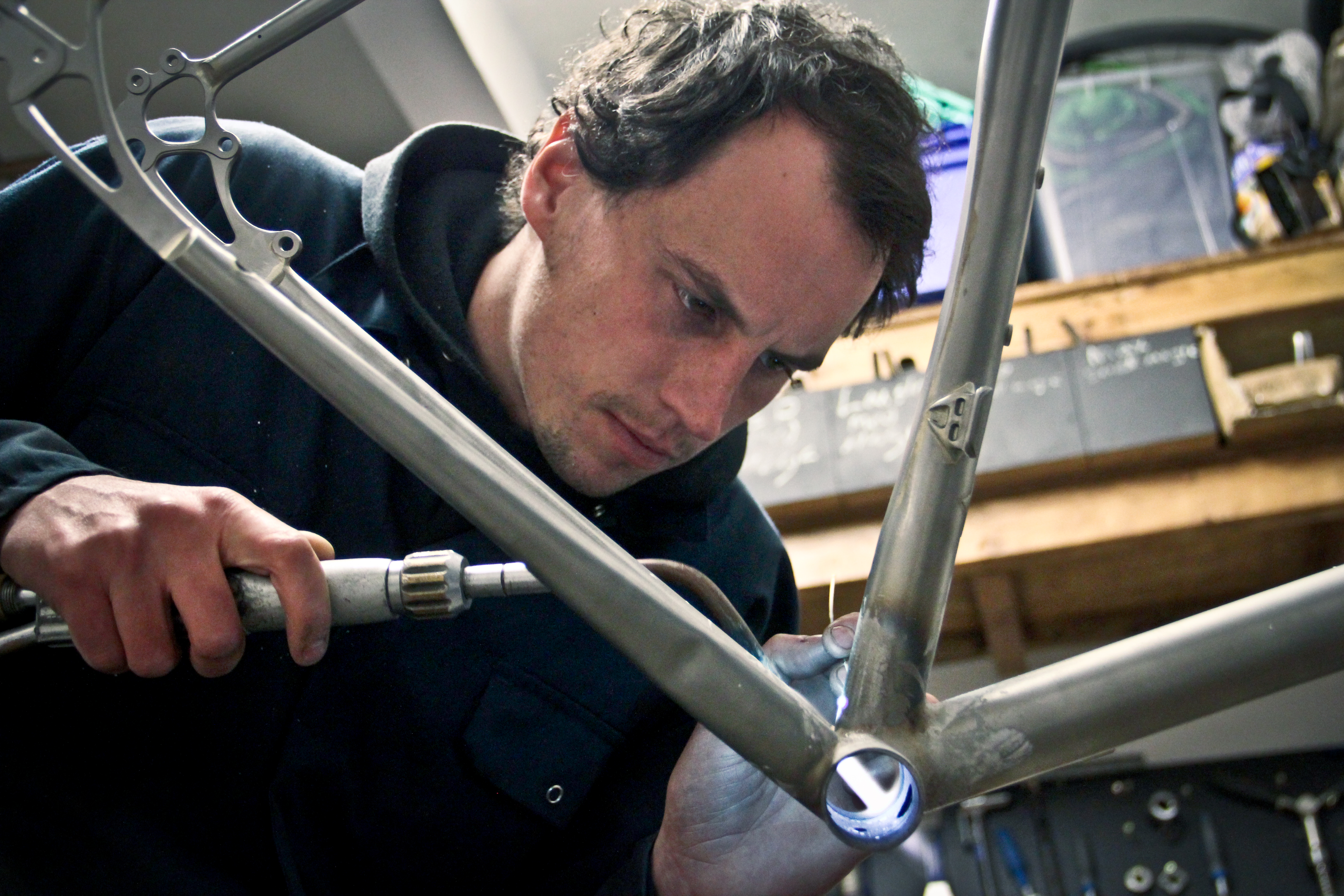
Ryan McCaig loves bicycles. He thinks they are beautiful, personal and intensely practical. It’s brilliant to hear a man, wearing overalls and brandishing a blowtorch, talk about his passion with equal measures of frankness and romance.
“You can make a chair and sit on it. You can make good art, put it in a gallery and talk about it. But when you make a bicycle, you can take it and ride it around the world, or carry heavy loads, or just ride it to work every day. It’s got such potential.”
McCaig, 30, builds custom bicycle frames in a tiny workshop in Hackney Wick. He’s originally from Canada but has lived in London for six years. When I arrive he is patiently examining a stainless steel bike frame held in a homemade clamp that can move in every direction. The frame pirouettes at the lightest touch.
He calls the operation Oak Cycles. On the shelf there’s a queue of cardboard boxes filled with steel tubes, each with a name scrawled on it representing someone waiting for a bicycle.
How did it all begin?
“I was going to cycle around the world but I couldn’t find anyone that was making the bike that I wanted for the trip. So I set about reading a bunch of books and buying tools. And I made a bike frame. That was five years ago now.”
How was the trip? “We didn’t make it the whole way around the world – it got really cold in Turkey so we turned right and headed for Africa instead.”
I’m unsure how a man who cycled to Africa can spend his days in this small room. “I once went hiking with a guy who told me ‘You need something. You can’t just be an aloof, hitchhiking, travelling bum the rest of your life.’ That stuck with me.”
McCaig seems far from an aloof bum. His skill set is ever expanding. He describes joining the metal tubes together by brazing – a process that looks like welding but with a softer glow. “I heat the two parent materials so they are able to accept the filler material brass. A molecular bond happens which is very strong.”
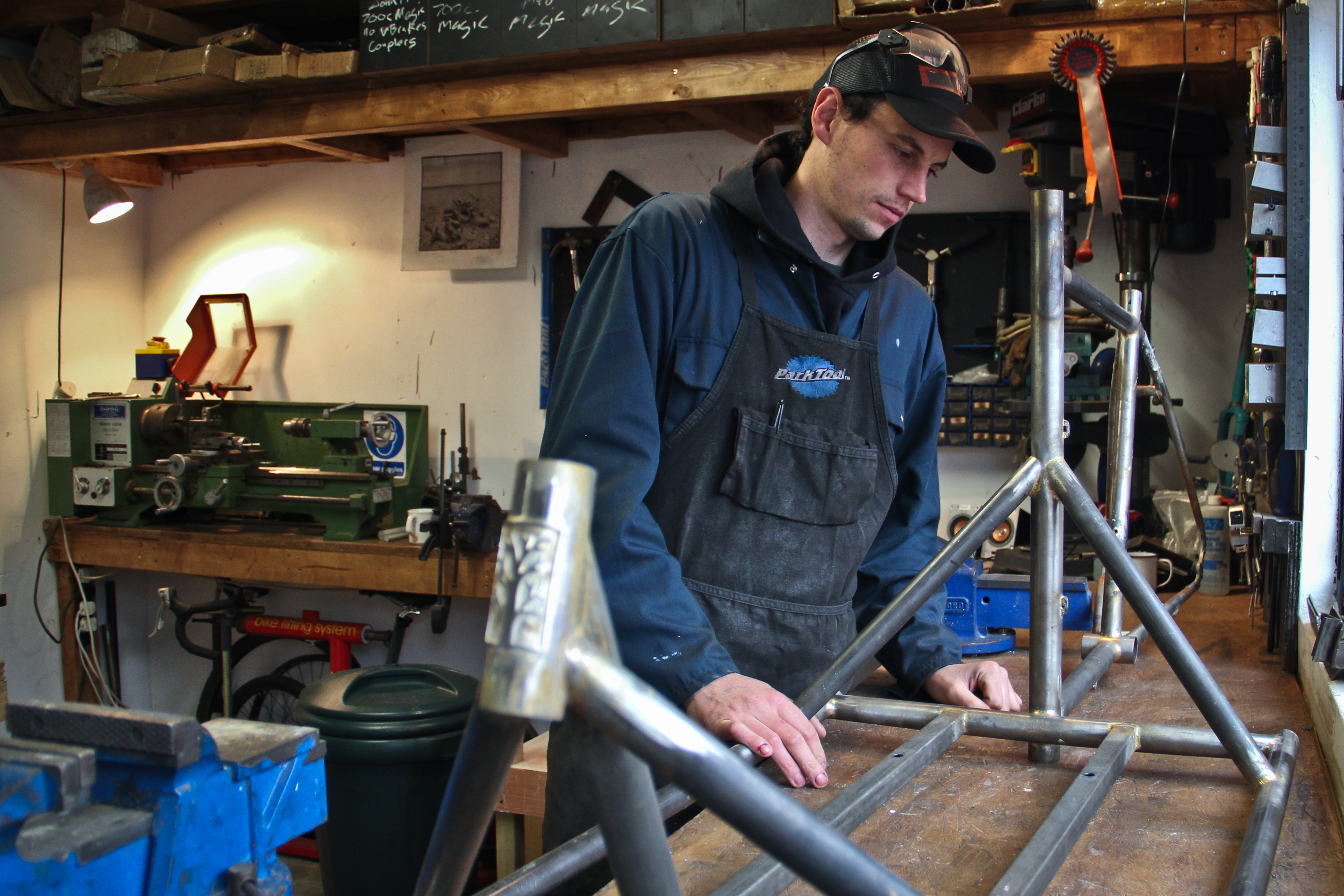
Putting the pieces together is only a small part of the job. McCaig’s customers are, generally, demanding middle-aged men with bachelor lifestyles. They’re men who have loved bikes their whole lives, but never quite found one that fits perfectly. McCaig likens it to when a man discovers, after years of buying their suits from M&S, just how good Savile Row tailoring feels.
But despite the fact that most of his customers already have ten or more bicycles, even the most Lycra-clad patron doesn’t share McCaig’s technical vocabulary.
“People ask for their bike to be ‘comfortable’ and ‘durable’. I have to turn those words into a functional form with angles, geometry, tube specifications, diameters and wall thicknesses. Those technical fabrication aspects dictate how the bike rides. But people just know they want a bike to be, you know, red.”
There can’t be many people making frames in this way, on this small a scale? “There was something like 50 frame builders in London in the 1950s, but when I was looking to learn there was just one.”
“So I taught myself. I made 10 bikes for 10 friends at the cost of materials. That was 100 hours per bicycle – 1000 hours total. I decided; that would be my own apprenticeship.”
A lot of his time is spent looking at steel. From the first consultation with the customer to the final product, the process takes a year. I ask if he’s ever sad to see the bikes leave.
“Artists will talk about how if you spend time with an inanimate object you grow attached to it and it’s hard to let it go. I’m not saying I’m an artist of course. But that stainless steel bike I was looking at when you came in, that has another 16 hours of work in it and I’ve already put 100 hours into it. If you’ve ever stared at one piece of material for 100 hours… there’s definitely an attachment.”
The commitment of a craftsman like McCaig seems baffling to the layman. He has always tinkered with objects, concocting structures in his uncle’s Ottawa garage as a teenager.
“I say this all happened in the last few years, but I first made a bike when I was 16. It was a penny-farthing. It was awesome; a bunch of old BMX bikes that I stuck together. I only had an angle grinder and a TIG welder. It was a bit of a disaster, but I just went for it.”
Things are no longer disastrous. Every customer so far, he says, has been a happy one. His work is, as we speak, conquering roads all over the world. Next month there will be four Oak bikes riding around South America simultaneously.
“We’re going to try and figure out a way they can meet up and take a photo. Touring bikes is what I love to do, so it’s pretty cool.”
He may not have made it around the globe himself, but his work most certainly has.
I made a video featuring barber Steve. It was for the blog I’m working on for uni called Bearded London.

Myself and four other MA Journalism students have started a blog. It’s called Bearded London. Our gorgeous logo (known as Jason) was designed by Miguel Martin. Check both BL and Miguel out. Now.

On Friday I attended the launch of The Gentle Author’s London Album. He’s the man behind the exhaustingly wonderful blog Spitalfields Life.
I was there, ostensibly, to complete an assignment for my MA. But when I spoke to the Gentle Author he gave me a quotation so glorious I thought it needed to be published in full.
Thank you sir, for both your patience on Friday and your endless stories.
“I think that something very political happened 200 years ago when they started printing newspapers. It created this thing that they call mass communication. But it wasn’t mass communication, it was mass distribution. And it created this myth of ‘the masses’ and this idea that everybody else in society is ‘the masses’. That became very exploited.
The outcome of this is that in big cities people don’t want to talk to each other, they’re scared of each other. I think that’s a great big lie. The point of my work is to write about everybody in a personal way. If everybody begins to know who everybody around them is, the world becomes a personal place.
That’s the great, liberating potential of the internet. Everyone can actually talk to each other and you can have mass communication. And in a very small way, that’s what this book and the blog is about – the potential of that.”
– The Gentle Author
You can purchase the book here.
AU REVOIR SIMONE FEATURE/INTERVIEW/PHOTOS on the CRACK website and then in the mag

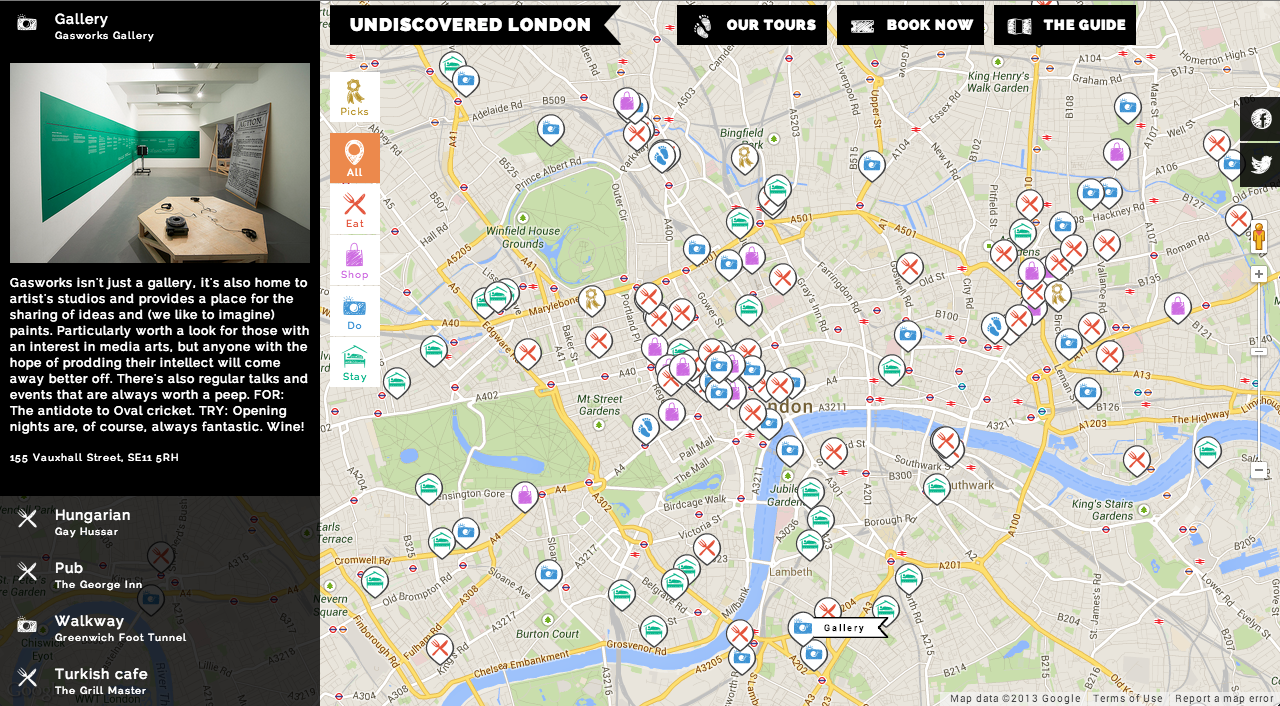
Earlier this year I compiled the copy and images for Undiscovered London’s online guide to the city. It’s now live and looks brilliant. Thanks to everyone who gave me their recommendations and thanks to UL for paying me to eat some incredible food!
I blogged about the Northern Irish accent for the New Statesman website. Click and GHB
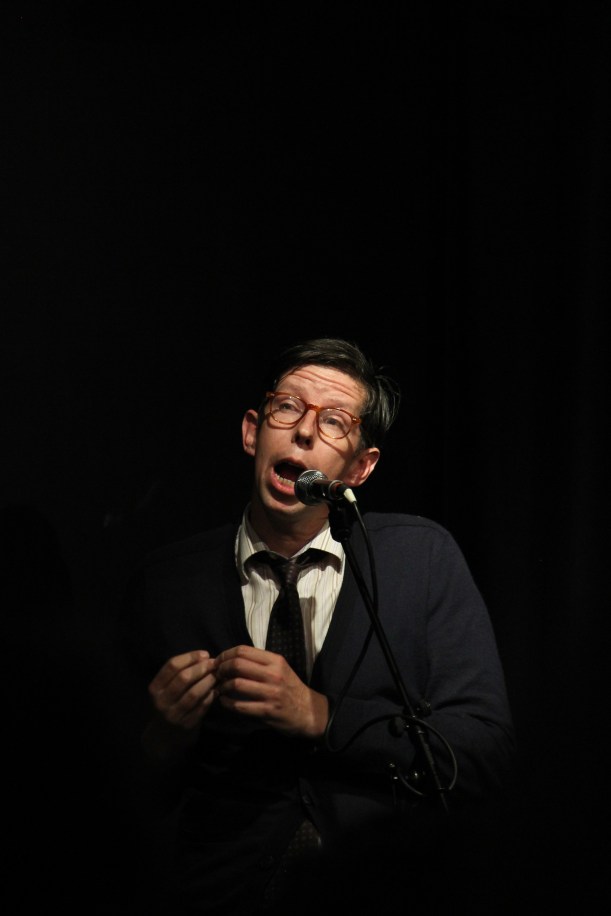
 Suzie McCracken